Green Crochet Lizard: A Playful Lagartija Tic-Tac Project
This green crochet lizard is a charming interpretation of the “Lagartija Tic-Tac” shown in Art-CroSan’s Spanish-language tutorial. The finished creature appears bright green, slim, and wonderfully expressive, with a long tail, four small legs, a gently shaped head, and glossy black eyes. Because no public description or captions are supplied, the tutorial itself is the best place to confirm technical details and construction choices.
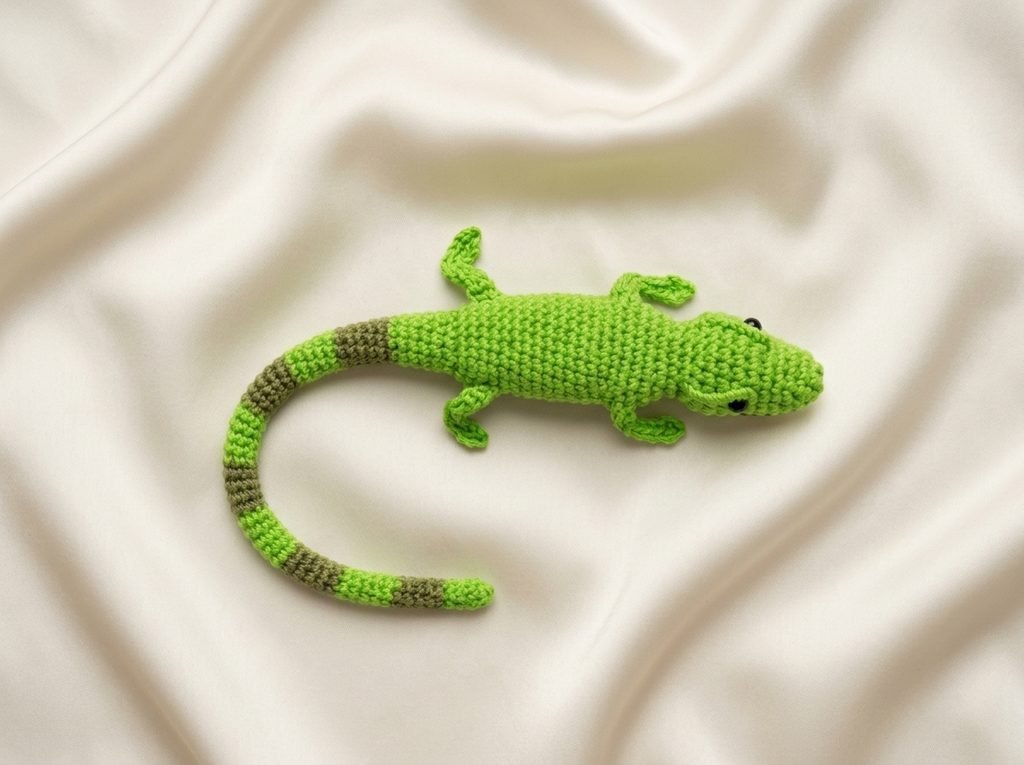
Visual details of the green crochet lizard
The visible design has the elongated silhouette associated with a small lizard rather than a compact plush toy. Its body runs in a mostly horizontal line, while the tail extends behind it and appears to taper as it curves. The head is slightly broader than the body, with a rounded snout and dark eyes that give the piece a lively expression.
Several short legs are visible along the underside. They create the impression of a lizard poised to crawl, rather than a flat ornament. The vivid green color is the dominant visual feature, and the compact crochet texture gives the surface a softly ridged, handmade appearance. A darker line near the mouth seems to emphasize the face, although viewers should treat that as a visual detail rather than a confirmed construction method.
Why this green crochet lizard stands out
The appeal of this green crochet lizard comes from its proportions. The long tail and low body make it instantly recognizable, while the small legs add character without overwhelming the shape. The bright color also helps the silhouette read clearly against a neutral background.
Small amigurumi-style animals often depend on subtle shaping, and this project shows how much personality can come from a few carefully placed details. The eyes draw attention to the face, the rounded snout softens the profile, and the tail gives the finished piece a sense of movement. It would be equally at home as a shelf companion, a playful desk decoration, or part of a collection of crocheted animals.
Who may enjoy making this project?
A green crochet lizard may appeal to crocheters who enjoy animal figures, nature-inspired makes, and projects with an unusual silhouette. It could be especially appealing to someone looking for a reptile-themed gift or a small handmade item for a child’s imaginative play, provided the finished piece is used safely and the eyes or other small details are securely attached.
This design may also suit makers who like adapting finished shapes. The same general idea could inspire a different colorway, a shorter tail, or a more decorative display piece. Since the supplied metadata does not identify the exact yarn, hook, stuffing, or assembly approach, those choices should be confirmed directly in the tutorial before beginning.
Planning your green crochet lizard
Before starting, gather the materials shown or named in the tutorial and compare them with what you already have. A vivid green yarn will preserve the recognizable appearance, while a darker shade could be useful for facial accents if the tutorial includes them. Keep any secondary color subtle so the head and body remain the visual focus.
Think about the intended use before choosing materials. A decorative shelf piece can prioritize color and surface appearance, while a frequently handled toy benefits from durable yarn, firmly secured details, and tidy finishing. It is also useful to prepare a safe place for small components, especially if the project includes separate eyes or tiny crocheted parts.
What to watch for in the tutorial
As you follow the green crochet lizard tutorial, pay close attention to the way the head transitions into the body. That area determines whether the finished animal looks streamlined or noticeably segmented. Watch how the creator shapes the snout and positions the eyes, since small placement changes can alter the expression.
The tail is another important visual checkpoint. Notice how its curve is formed and how its thickness changes toward the end. The legs deserve equal attention: compare their placement from one side to the other and observe how they are attached to the underside. Since captions are not available, pausing frequently and using the visual demonstrations carefully may help you track each stage.
Color, proportion, and finishing ideas
The original-looking green crochet lizard relies on a single strong color, which makes it easy to recognize. You could experiment with lime, olive, forest, or blue-green shades while keeping the same elongated proportions. A slightly darker green along the back or tail could suggest natural markings, but too many color changes may distract from the clean silhouette.
Proportion is especially important with this animal. If the head becomes too large, the piece may look more like a fantasy dragon; if the legs are too long, it may lose the low, crawling profile visible in the finished example. Use the thumbnail as a broad visual reference, and compare your work with the tutorial whenever you make shaping decisions.
For finishing, inspect the face from several angles before securing everything permanently. Check that the eyes appear balanced, the snout is centered, and the tail flows naturally from the body. Gentle shaping with your fingers can help the legs and tail settle into a convincing pose without forcing the stitches.
Helpful troubleshooting and care
If your green crochet lizard looks uneven, first check whether the stuffing is distributed consistently rather than immediately changing your tension. Lumpy filling can affect the head, body, and tail more than expected. Add small amounts gradually and shape the piece as you work.
If the tail curls in an unintended direction, examine how it was held during finishing and whether the stitches are being compressed. A light adjustment may be enough, but avoid pulling aggressively because that can distort the fabric. If the legs seem mismatched, compare their attachment points visually and correct the alignment before hiding the ends.
For care, keep the finished item away from rough surfaces that may catch the yarn. Dust it gently and follow the fiber-care guidance associated with your chosen yarn. If it is given to a child, inspect the eyes, limbs, and any sewn details regularly; small detachable parts require particular caution.
Creator
Frequently asked questions
What makes this green crochet lizard recognizable?
Its vivid green body, elongated shape, tapered tail, small legs, rounded head, and dark eyes create the recognizable lizard appearance shown in the finished project.
Is the green crochet lizard suitable for a beginner?
The available metadata does not confirm a difficulty level. Consider your comfort with shaping, small parts, and assembling three-dimensional crochet figures, then review the tutorial before deciding.
Can I use another color for this lizard?
Yes, color is an easy way to personalize the project. Green preserves the visible look, while olive, teal, or brown can create a different reptile-inspired effect.
How can I keep the green crochet lizard’s shape neat?
Work carefully around the head, body, legs, and tail, distribute stuffing gradually, and check the alignment of the facial features before final finishing. Confirm the specific shaping process in the tutorial.
What can I do with the finished Lagartija Tic-Tac?
It can serve as a playful shelf accent, a nature-themed gift, or part of a crocheted animal display. For children, make sure all small details are firmly secured and appropriate supervision is provided.
A lively finish for a playful project
This green crochet lizard turns a simple reptile silhouette into a memorable handmade character. Its bright color, long tail, tiny legs, and expressive face offer plenty of visual interest while leaving room for thoughtful customization. Use the tutorial to verify the technical details, work patiently through the shaping, and let the finished Lagartija Tic-Tac bring a little movement and personality to your crochet collection.
Watch the Original Crochet Tutorial
Watch the complete visual demonstration from the original creator below.

Tutorial created by: Art-CroSan