
Crochet Giraffe Sweater: A Cheerful Intarsia-Inspired Project
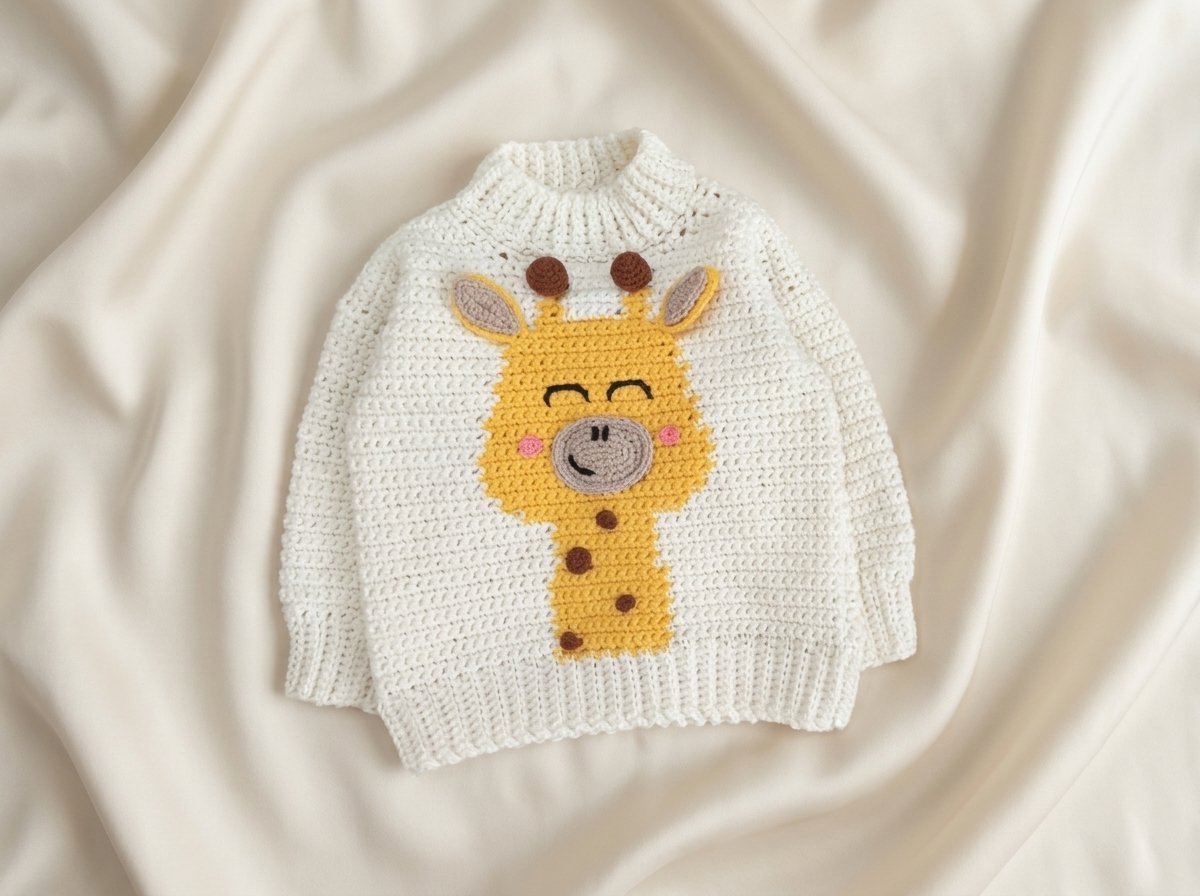
The crochet giraffe sweater shown in the tutorial is a cheerful children’s garment built around a friendly giraffe motif. The finished piece appears in a soft, light color with a warm golden-yellow giraffe centered on the front. Dark brown details define the ears, spots, eyes, mane-like accents, and small facial features, while the relaxed silhouette keeps the design playful and easy to notice.
What makes this crochet giraffe sweater distinctive
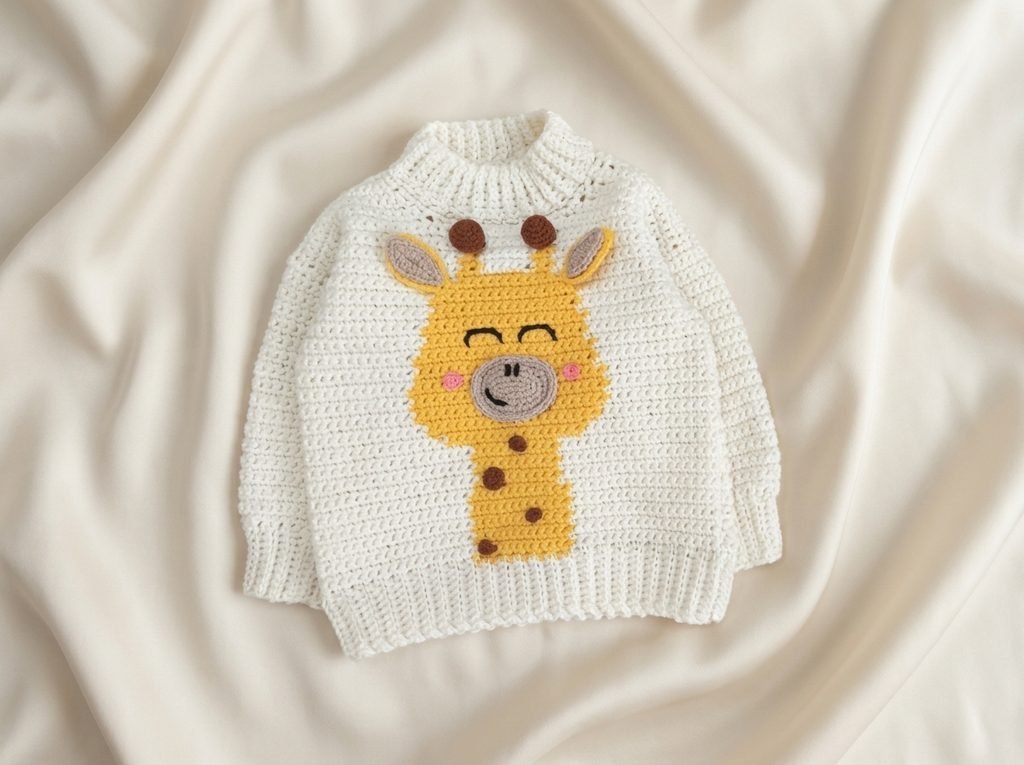
Visually, the sweater has a simple light-colored body that lets the animal design take center stage. The giraffe’s long neck creates a strong vertical focal point, and the rounded muzzle, small smile, and contrasting spots give it a friendly illustrated quality. The thumbnail also shows ribbed-looking edges at the lower hem and cuffs, along with a rounded neckline that helps frame the motif without competing with it.
The title identifies the project with the Spanish phrase “técnica intarsia,” so color placement is an important part of the design’s appeal. Rather than relying on surface decoration alone, the visible image suggests that several yarn colors are organized within the main fabric to form the giraffe. Readers should treat the thumbnail as a visual guide, however, and rely on the tutorial for the creator’s actual colorwork process.
Why this crochet giraffe sweater stands out
Animal-themed clothing often succeeds because the motif communicates instantly. This giraffe has a particularly recognizable shape: a tall neck, small head, raised ears, and scattered brown markings. The restrained palette also makes the garment practical to style. A light background works with many everyday outfits, while the yellow and brown accents add enough contrast to make the front design lively.
The design balances decoration and wearability. There are no visible buttons, dangling embellishments, or bulky appliqués competing with the central picture. That relatively clean front may appeal to crocheters who want a statement garment that still looks comfortable for a child’s ordinary wardrobe.
Who may enjoy making and wearing it?
This project may suit crocheters who enjoy visual colorwork, character-inspired clothing, and handmade gifts for children. It could become a playful birthday present, a special holiday layer, or a cozy sweater for family photographs. The finished design is especially appealing for children who enjoy animals, safari themes, or bright illustrated details.
For makers, the project offers a chance to practice careful color management without covering the entire garment in a complicated pattern. The giraffe occupies a defined central area, so the surrounding fabric remains visually calm. Anyone new to this type of colorwork should still expect to pause frequently and study the tutorial, since the video does not include public captions or a supplied written description.
Planning your crochet giraffe sweater
Before beginning, decide which version of the visible palette you want to follow. The pictured sweater uses a warm off-white or cream-looking background, golden yellow for the giraffe, and dark brown for the spots and facial details. A soft tan could replace the yellow for a quieter animal, while a richer mustard would make the motif more prominent. Keep the background and motif sufficiently different in value so the giraffe remains readable from a distance.
It is also useful to think about the scale of the finished garment before committing to the motif. The thumbnail suggests a child-sized sweater, but it does not establish exact measurements or sizing information. Compare the proportions of the body, sleeves, neckline, and central picture with a suitable garment, and verify all sizing decisions in the tutorial rather than assuming the pictured proportions will fit every child.
Prepare separate yarn sections or bobbins for the areas where colors change, following the creator’s demonstrated method. Editorially, it is wise to keep color transitions tidy and avoid pulling unused yarn too tightly across the back. A relaxed fabric will help the sweater lie smoothly and will make the giraffe’s outline easier to evaluate.
What to watch for in the tutorial
When following the crochet giraffe sweater tutorial, pay close attention to how the creator handles the boundary between the light background and the giraffe. The outline around the head, neck, and muzzle is visually important, so small placement differences can change the expression. Pause when the face is formed and compare the developing image with the finished thumbnail.
Also watch how the color changes are carried, joined, or secured. The public metadata does not confirm the exact stitch or construction technique, so avoid assuming that the visible result can be reproduced by a particular method until the tutorial demonstrates it. The 50-minute runtime suggests that several stages may need careful viewing, but it does not establish how long the project will take to make.
Pay attention to the edges as well. The hem and cuffs appear more structured than the main body, and the neckline has a neat finished appearance. These details help the garment look polished, even though the exact shaping and finishing instructions are not supplied in the description.
Color, proportion, and finishing ideas
For a recognizable giraffe, preserve the contrast between the golden face and the darker spots. If you change the background, test a small color pairing first. A pale blue, muted sage, or soft pink could create a different mood, but very pale motif colors may disappear against similarly light fabric.
The visible giraffe is tall and centered, so keeping it aligned with the sweater’s front will have a major effect on the finished appearance. Before final finishing, inspect the garment flat and check whether the neck, sleeves, and lower edge frame the image evenly. A slightly uneven border can make an otherwise charming motif look off-center.
Customization can remain subtle. You might adjust the giraffe’s main color, vary the background, or add a coordinating solid-color edging if the tutorial’s construction allows it. Avoid adding heavy decorations over the face, since the eyes, muzzle, and spots are what give the character its expression.
Troubleshooting and care
If the front fabric puckers around a color change, the tension may be too tight. Pause and compare the fabric’s flexibility with the surrounding single-color areas. If the back feels unusually dense, review how unused colors are managed in the tutorial. Loose carried strands can also catch during dressing, so secure and trim them carefully according to the demonstrated finishing approach.
For care, follow the fiber and yarn information on your labels rather than relying on the thumbnail. When those details are unknown, conservative handling is sensible: wash gently according to the yarn’s instructions, avoid high heat, reshape the sweater while damp, and let it dry flat. Store it without placing heavy items on the raised or textured areas of the motif.
Because this is children’s clothing, inspect the finished sweater before use. Make sure colorwork ends are secure, edges are comfortable, and no loose strand or added decoration could become a snagging concern. These are general safety recommendations, not details confirmed by the creator.
Creator
Frequently asked questions
What colors are visible in the crochet giraffe sweater?
The thumbnail shows a light cream or off-white background, a golden-yellow giraffe, and dark brown details for the spots and facial features. Exact yarn shades are not identified in the supplied metadata, so use the tutorial and your own color samples when choosing materials.
Is the crochet giraffe sweater a suitable first colorwork project?
The visible motif is clearly defined, but the exact technique and construction are not confirmed beyond the title’s reference to intarsia. Beginners may enjoy it if they are comfortable pausing, replaying sections, and checking tension carefully. Review the tutorial before deciding whether its demonstrated method matches your experience.
Can the giraffe motif be changed?
You can experiment with the visible palette or make a small color variation while preserving the giraffe’s recognizable outline. Any changes to the motif’s placement or size should be planned carefully, because they may affect the surrounding colorwork and garment proportions.
How should I choose the size for this crochet giraffe sweater?
The thumbnail does not provide confirmed measurements or sizing information. Compare the pictured proportions with the intended wearer’s measurements and verify the creator’s sizing guidance in the tutorial before starting.
Final thoughts
This crochet giraffe sweater turns a simple light-colored garment into a friendly character piece through thoughtful color placement and expressive details. Its centered animal motif, warm palette, and tidy-looking edges make it a memorable handmade option for a child’s wardrobe. With careful planning and close attention to the tutorial’s colorwork process, you can use the visible design as inspiration while making choices that suit your yarn, fit, and intended wearer.
Watch the Original Crochet Tutorial
Watch the complete visual demonstration from the original creator below.

Tutorial created by: Garabatos de lana •Merly
One Comment